A Guide to Choosing the Best PRP Tube for Effective Platelet-Rich Plasma Therapy
Choosing the right tube for PRP (Platelet-Rich Plasma) therapy is essential for achieving consistent, high-quality results in clinical treatments. With various anticoagulants, volumes, and separation mechanisms available, understanding the differences between tube types can help professionals select the most effective option for facial aesthetics, hair restoration, orthopedics, or regenerative medicine. In this guide, we break down each PRP tube type to help you make informed decisions based on your practice’s specific needs. A PRP tube is the primary tube for PRP preparation in clinical settings, and its design directly affects platelet concentration, separation efficiency, and handling consistency.
In this guide, you’ll learn what PRP tubes are, the different types available, and how to select the best option for your practice.
Which PRP Tubes Are Used in Clinical Practice Today
Clinics typically standardize PRP preparation around a limited number of tube configurations to maintain consistent platelet yield and predictable workflow. In daily clinical practice, the following PRP tube types are most commonly used:
- Classic PRP tubes for clinical use — ACD-based tubes with separation gel, commonly used for dermatology, aesthetics, and hair restoration
- PRP tubes with additives such as biotin — selected when treatment protocols require additive-supported platelet activity
- Browse all PRP tubes — compare sizes, additives, and configurations in one place
What Are PRP Tubes and Why They Matter
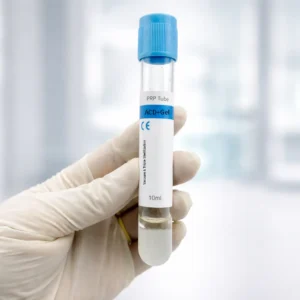
PRP tubes are specialized medical-grade blood collection tubes used to isolate platelet-rich plasma (PRP) from whole blood. These tubes are uniquely designed with anticoagulants—such as ACD, sodium citrate, or heparin—to prevent clotting during centrifugation. Many PRP tubes also contain a separator gel, which forms a physical barrier between the platelet-rich plasma and the red or white blood cells during the spin process.
Unlike standard blood collection tubes, PRP tubes are engineered specifically to optimize platelet concentration, which is critical for achieving the regenerative effects of PRP therapy. They are sterile, single-use devices that ensure safety, accuracy, and reproducibility in clinical settings.
Depending on the intended treatment—such as facial rejuvenation, hair restoration, orthopedic repair, or wound healing—clinicians may choose from various PRP tube types and volumes (e.g., 10mL, 12mL, 15mL). The choice of tube for PRP plays a vital role in the final yield, purity, and performance of the PRP solution used in therapy.
Clinics researching PRP tubes often compare multiple options before making a decision. For practices that prioritize fast delivery, regulatory compliance, and consistent quality, many clinics choose suppliers offering PRP tubes in stock in the USA or structured PRP tubes wholesale programs for long-term purchasing.
In practical workflows, selecting the correct tube for PRP plays a major role in platelet recovery and overall treatment reproducibility.
👉 Looking for CE-certified PRP tubes? Shop PRP Tubes (10mL/12mL) →
Types of Tubes for PRP Therapy: Choosing the Right Option
1. ACD-A PRP Tube – Classic PRP tube
Anticoagulant: Acid Citrate Dextrose Solution A (ACD-A)
Applications: Sports medicine, orthopedics, aesthetics
ACD-A PRP tube is a type of PRP (Platelet-Rich Plasma) tube that contains an anticoagulant called Acid Citrate Dextrose Solution A (ACD-A). This anticoagulant prevents the blood from clotting and allows for the collection and concentration of platelets.
Healthcare providers commonly use ACD-A PRP tubes in orthopedic and sports medicine procedures, as well as in aesthetic and cosmetic treatments. They often prefer ACD-A PRP tubes over other types because the ACD-A anticoagulant does not interfere with the growth factors and other bioactive molecules in the concentrated platelets.
ACD-A PRP tubes typically contain a separator gel that separates the red blood cells from the platelets, allowing for the collection of a concentrated platelet-rich plasma sample. The resulting PRP can then be used for injection into injured or damaged tissue to promote healing and tissue regeneration.
Overall, ACD-A PRP tubes are a popular choice for healthcare providers seeking to obtain high-quality PRP for use in various medical procedures.
Features:
- Prevents blood clotting without interfering with growth factors
- Contains separator gel for easy platelet isolation
💡 Most clinics choose ACD-A tubes for aesthetics and orthopedics
👉 Explore our Classic ACD-A PRP Tube →
👉 Explore our Classic ACD-A PRP Tube Wholesale →
2. ACD-A PRP Tube – PRP Tube with Biotin
Additive: Biotin (Vitamin B7)
Applications: Hair Restoration, Scalp Treatments
Biotin PRP tubes are designed to support hair restoration treatments by combining traditional PRP with Biotin (Vitamin B7), a nutrient widely associated with hair and scalp health.
While standard PRP focuses on platelet concentration alone, Biotin-enhanced PRP introduces an additional layer of support for hair follicle activity and keratin structure.
Why Biotin Matters in PRP Treatments
Biotin plays a key role in:
- Supporting keratin production
- Strengthening hair structure
- Promoting healthier scalp conditions
When used alongside platelet-rich plasma, it can help create a more supportive environment for hair regeneration procedures.
Best Use Cases for Biotin PRP Tubes
Biotin PRP tubes are commonly used in:
- Hair loss treatments
- Androgenetic alopecia (pattern hair loss)
- Hair thinning and early-stage hair decline
- Scalp revitalization therapies
Advantages Over Standard ACD-A PRP Tubes
Compared to standard PRP tubes, Biotin PRP tubes offer:
- Additional nutrient support for hair-focused treatments
- More targeted positioning for hair clinics
- Enhanced perceived treatment value for patients
Important for clinics:
If your primary service includes PRP for hair restoration, relying only on standard ACD-A tubes limits your differentiation. Biotin-enhanced PRP provides a more specialized approach aligned with patient expectations.
💡 Most hair clinics choose Biotin PRP tubes to differentiate their PRP hair restoration services.
👉 Explore our Biotin PRP Tube →
3. ACD-A PRP Tube – PRP Tube with HA
Additive: Hyaluronic Acid (HA)
Applications: Skin Rejuvenation, Aesthetic Treatments
HA PRP tubes are developed for skin rejuvenation and aesthetic treatments, combining platelet-rich plasma with Hyaluronic Acid (HA), a key molecule responsible for skin hydration and elasticity.
This combination allows clinics to deliver both:
- regenerative effects from PRP
- and immediate hydration support from HA
Why Hyaluronic Acid Matters in PRP
Hyaluronic Acid is widely used in aesthetic medicine due to its ability to:
- Retain moisture in the skin
- Improve skin elasticity and smoothness
- Support tissue repair and collagen activity
When integrated into PRP treatments, HA helps enhance overall skin quality and visible results.
Best Use Cases for HA PRP Tubes
HA PRP tubes are ideal for:
- Facial rejuvenation treatments
- Anti-aging procedures
- Fine lines and skin texture improvement
- Dull or dehydrated skin conditions
Advantages Over Standard ACD-A PRP Tubes
Compared to standard PRP tubes, HA PRP tubes provide:
- Immediate skin hydration benefits
- Enhanced aesthetic treatment outcomes
- Stronger positioning for dermatology and aesthetic clinics
💡 Aesthetic clinics often prefer HA PRP tubes for more visible and immediate skin improvement results.
👉 Explore our HA PRP Tube →
4. CPD PRP Tube
Anticoagulant: Citrate Phosphate Dextrose (CPD)
Applications: Aesthetic treatments, wound healing, regenerative medicine
CPD PRP tube is a type of PRP (Platelet-Rich Plasma) tube that contains an anticoagulant called Citrate Phosphate Dextrose Solution. This anticoagulant prevents the blood from clotting and allows for the collection and concentration of platelets.
Healthcare providers commonly use CPD PRP tubes in aesthetic and cosmetic treatments, as well as for wound healing and tissue regeneration. They often prefer CPD PRP tubes over other types because the CPD anticoagulant preserves the bioactivity and function of the concentrated platelets.
CPD PRP tubes typically contain a separator gel that separates the red blood cells from the platelets, allowing for the collection of a concentrated platelet-rich plasma sample. The resulting PRP can then be used for injection into injured or damaged tissue to promote healing and tissue regeneration.
Overall, CPD PRP tubes are a popular choice for healthcare providers seeking to obtain high-quality PRP for use in various medical procedures, particularly those related to aesthetic and regenerative medicine.
Features:
- Preserves platelet bioactivity for better tissue regeneration
- Popular in cosmetic procedures for its effectiveness in skin rejuvenation
5. Sodium Citrate PRP Tube
Anticoagulant: Sodium Citrate
Applications: Orthopedics, hair restoration, cosmetic treatments
Sodium Citrate PRP (Platelet-Rich Plasma) tube is a type of PRP tube that contains an anticoagulant called Sodium Citrate. This anticoagulant prevents the blood from clotting and allows for the collection and concentration of platelets.
Sodium Citrate PRP tubes find frequent use in medical procedures such as orthopedics, sports medicine, and aesthetic and cosmetic treatments. Some healthcare providers prefer them over other types of PRP tubes because the Sodium Citrate anticoagulant effectively prevents clotting and preserves the platelets’ bioactivity.
Sodium Citrate PRP tubes typically contain a separator gel that separates the red blood cells from the platelets, allowing for the collection of a concentrated platelet-rich plasma sample. The resulting PRP can then be used for injection into injured or damaged tissue to promote healing and tissue regeneration.
Overall, Sodium Citrate PRP tubes are a popular choice for healthcare providers seeking to obtain high-quality PRP for use in various medical procedures, particularly those related to orthopedics, sports medicine, and aesthetic and regenerative medicine.
Features:
- Excellent at preventing blood clotting
- Ensures bioactive platelets for optimal results
👉 Ideal for clinics focusing on hair restoration and orthopedics.
6. Heparin PRP Tube
Anticoagulant: Heparin
Applications: Skin rejuvenation, sports medicine
Heparin PRP (Platelet-Rich Plasma) tube is a type of PRP tube that contains an anticoagulant called Heparin. This anticoagulant prevents the blood from clotting and allows for the collection and concentration of platelets.
Healthcare providers frequently choose Heparin PRP tubes for medical procedures such as orthopedics, sports medicine, and aesthetic treatments. These tubes effectively prevent clotting while maintaining the platelets’ bioactivity, making them a reliable option for promoting optimal therapy outcomes.
Heparin PRP tubes typically contain a separator gel that separates the red blood cells from the platelets, allowing for the collection of a concentrated platelet-rich plasma sample. The resulting PRP can then be used for injection into injured or damaged tissue to promote healing and tissue regeneration.
Overall, Heparin PRP tubes are a popular choice for healthcare providers seeking to obtain high-quality PRP for use in various medical procedures, particularly those related to orthopedics, sports medicine, and aesthetic and regenerative medicine.
Features:
- Prevents clotting while maintaining platelet functionality
- Suitable for a variety of medical and aesthetic procedures
Choosing the Right PRP Tube
Choosing the right PRP (Platelet-Rich Plasma) tube depends on the specific medical procedure and the desired outcome. Here are some factors to consider when selecting the right PRP tube:
- Anticoagulant: Different PRP tubes use different anticoagulants, such as ACD-A, CPD, Sodium Citrate, or Heparin. Each anticoagulant has its advantages and disadvantages, and the type and amount of anticoagulant may vary among different PRP tubes, so it is important to choose the tube that is appropriate for the medical procedure and the preferences of the healthcare provider.
- Separation gel: Some PRP tubes contain a separator gel that separates the red blood cells from the platelets, allowing for the collection of a concentrated platelet-rich plasma sample. The type and amount of separator gel may also vary among different tubes, so it is important to choose the tube that is appropriate for the medical procedure. The choice of separation gel depends on the specific medical procedure and the preferences of the healthcare provider.
- Volume: PRP tubes offer various sizes and capacities, ensuring you can select the one that matches the precise amount of blood required for collection.
- Quality: The quality of the PRP tube is also an important factor to consider. High-quality PRP tubes are sterile, free from contamination, and have consistent performance.
Overall, the choice of the right PRP tube depends on the specific medical procedure, the desired outcome, and the preferences of the healthcare provider. It is important to consult with a healthcare professional to determine the appropriate PRP tube for a specific medical procedure.
Quick Comparison: Which Tube for PRP Therapy Should You Use?
| Tube Type | Anticoagulant | Applications | Key Benefits |
|---|---|---|---|
| ACD-A | ACD-A | Sports medicine, aesthetics, skin rejuvenation, regenerative medicine | Non-interference with growth factors |
| CPD | CPD | Wound healing, regenerative medicine | Preserves platelet bioactivity |
| Sodium Citrate | Sodium Citrate | Orthopedics, cosmetic treatments | Effective clot prevention |
| Heparin | Heparin | Skin rejuvenation, orthopedics | Strong anticoagulant properties |
When selecting PRP tubes for clinical use, reliability and supply consistency matter as much as performance. Clinics managing ongoing treatments often benefit from USA-based PRP tube inventory for faster turnaround, while high-volume practices typically reduce costs through PRP tube wholesale purchasing.
| Tube Type | Key Additive | Primary Applications | Key Benefits |
|---|---|---|---|
| ACD-A PRP Tube | ACD-A (Anticoagulant) | General PRP, orthopedics, aesthetics | Prevents clotting without affecting growth factors |
| Biotin PRP Tube | Biotin (Vitamin B7) | Hair restoration, scalp treatments | Supports hair follicle health and keratin structure |
| HA PRP Tube | Hyaluronic Acid (HA) | Skin rejuvenation, anti-aging | Enhances hydration, skin quality, and elasticity |
💡 Not sure which tube to choose? See our full PRP Tube Collection→
Choosing the Right PRP Tube for Your Clinic
- Tube size: 10mL vs 12mL — selection based on required blood volume and treatment area
- With separation gel vs without gel — separation stability and centrifugation consistency
- With additives vs classic PRP tubes — protocol-driven selection for specific applications
PRP therapy is an effective and safe treatment option for various medical conditions, and the right PRP tube is crucial for successful therapy. By understanding the different types of PRP tubes and their features, patients and medical professionals can make informed decisions and choose the right PRP tube for their therapy. If you’re considering PRP therapy, talk to a qualified medical professional to see if it’s right for you and which PRP tube is best suited for your needs.

FAQs About PRP Tubes
What tube is used for PRP?
What size tube is best for PRP?
Is separation gel required in a PRP tube?
4. What is the best tube for PRP therapy?
What makes PRP tubes different from standard blood tubes?
PRP tubes isolate and concentrate platelets by design. Unlike standard blood collection tubes, they contain anticoagulants and often include separation gel engineered specifically for PRP preparation.
Can I buy PRP tubes wholesale or in bulk?
Are IPPOCARE PRP tubes certified and safe for clinical use?
Are PRP tubes reusable?
Can all PRP tubes be used for every procedure?
What tube sizes are available?
Do PRP tubes expire?
Do I need to add calcium chloride (CaCl₂) or other activators?
What is a Biotin PRP tube used for?
Are Biotin PRP tubes better for hair loss treatments?
What are HA PRP tubes used for?
Are HA PRP tubes better for facial treatments?
What is the difference between ACD-A, Biotin, and HA PRP tubes?
ACD-A PRP tubes → general-purpose PRP treatments
Biotin PRP tubes → hair restoration and scalp treatments
HA PRP tubes → skin rejuvenation and aesthetic procedures
Each type is designed to support specific clinical outcomes.
Why Choose Us for PRP Tubes?
Your practice deserves the best, and we deliver just that. Here’s why healthcare providers trust us for their PRP needs:
✔ Uncompromising Quality: Every PRP tube undergoes rigorous testing to ensure it meets the highest standards of safety and efficacy.
✔ Designed for Professionals: Our tubes support a wide range of medical and aesthetic applications, including regenerative treatments and beauty enhancements.
✔ Cost-Effective Bulk Options: Save more when you order in bulk. Our wholesale pricing ensures your practice stays stocked without straining your budget.
✔ Reliable Results: Engineered for precision, our PRP tubes maximize platelet concentration, enhancing treatment outcomes for your patients.
✔ Exceptional Support: Need guidance? Our team is here to help you select the best PRP tube for your specific requirements.
Upgrade Your PRP Practice Today
Join thousands of clinics worldwide using IPPOCARE’s professional PRP tubes.
✔ Available in 10mL & 12mL sizes
✔ Pre-loaded with ACD + separator gel
✔ Cost-effective bulk orders with reliable results
👉 Shop PRP Tubes Now →
👉 Looking for PRP tube with Biotin or PRP tube with HA? View our specialty tubes →
Last Updated: April 21, 2026